TRICK
How Your Problems Trick You and 5 Ways to Trick Them Back
Three decades in the counseling room taught Bret Legg the quiet way our problems trick us, and this is the book where he finally writes it down. TRICK names the trick plainly, then hands you five practical, hard-won ways to trick it back, honest, hopeful, and built to actually use.
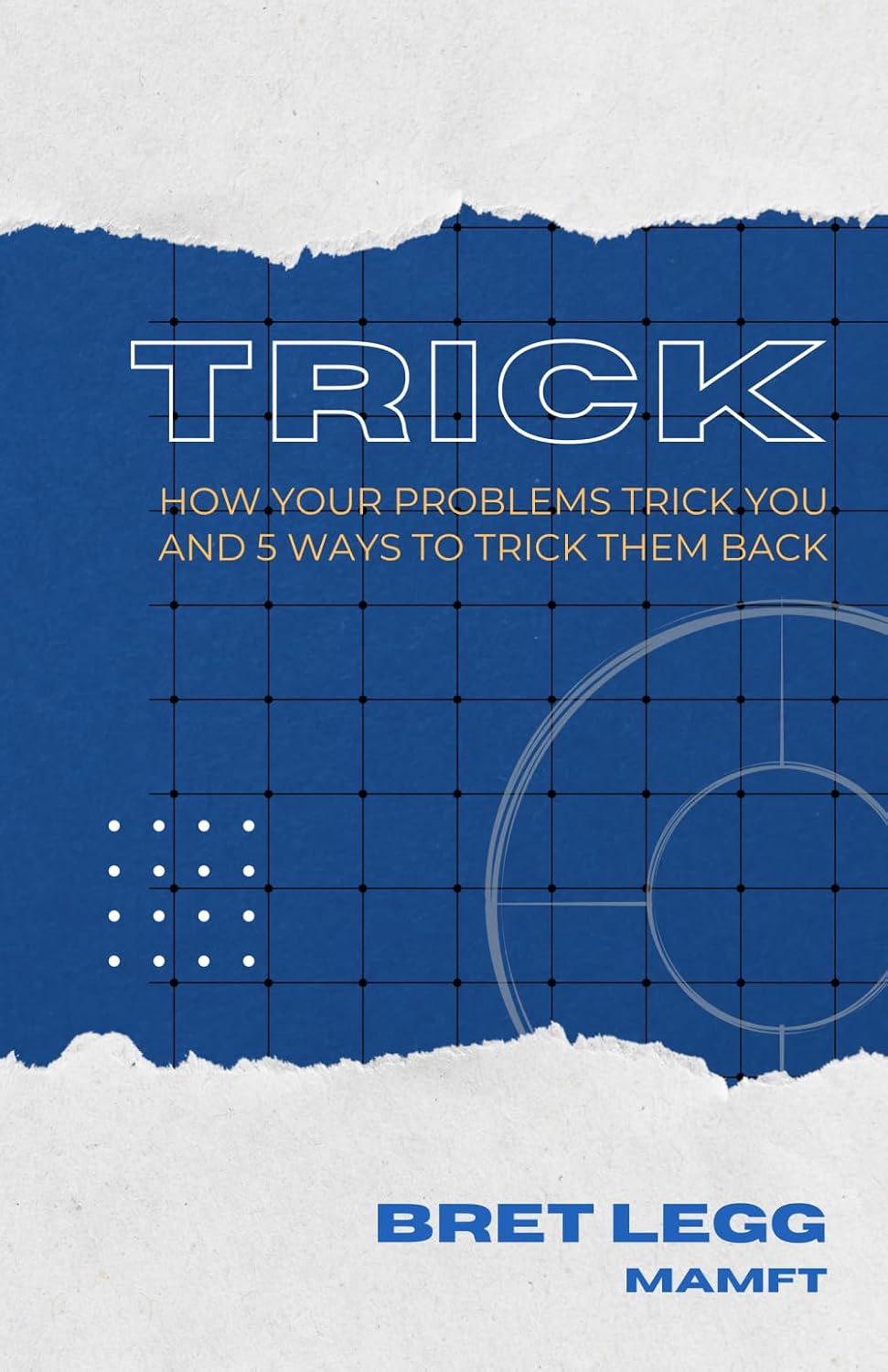
What the book is about
Problems rarely announce themselves. They arrive wearing something else: a good reason, a hard week, a habit that used to help. That is the trick in the title. By the time most people sit down across from a counselor, the problem has already talked them into a story about who they are, and the story is doing more damage than the problem.
Bret Legg has spent more than thirty years in that room, listening to marriages, families, and individuals describe the same handful of traps in a thousand different ways. TRICK is his first book, and it is built the way he works: name the thing, look at it without flinching, then do something small and specific about it. The subtitle promises five ways to trick your problems back, and the book is organized around them.
It is written for the person who is tired of being handed a theory. Every chapter is meant to be used, not admired. If you have watched one of the 2-Minute Truths and wished for the longer conversation behind it, this is that conversation. TRICK is a 192-page paperback, ISBN 9798999408907.
Five honest questions
These are not the book's five ways. They are five questions Bret asks early in a first conversation, in order, about whatever you are carrying right now. Answer them on paper before you read a word and you will get more out of the book.
-
Name it plainly
What would you call this if nobody was listening?
Say it in one sentence, without the softening words you normally use, and notice how different it sounds out loud.
-
Find out what it is costing you
What have you already paid for keeping this the way it is?
Count it in hours, sleep, money, and people, because a cost you have never added up is a cost you keep paying.
-
Notice what it promises
What does this problem tell you it is protecting you from?
Almost every trap offers something first, comfort, control, or a way to avoid a harder conversation, and that offer is the hook.
-
Decide what you will do first
What is the smallest step you could take before this week ends?
Pick something so small you cannot talk yourself out of it, then do that one thing instead of planning the other twelve.
-
Tell someone
Who is going to know you are working on this?
Change that stays private tends not to last, so choose one person who will ask you about it and mean it.
Three kinds of readers
Couples
For two people who keep having the same argument in different clothes.
Marriage & Family helpAnyone stuck
For the person who knows what they should do and cannot seem to start.
How counseling worksRead the first chapter
Want to read right now? Amazon shows the opening pages of the paperback: read the sample on Amazon.
Prefer it in your inbox? Leave your name and email and Bret will send the opening chapter as a PDF. You will also get an occasional note when there is new writing; unsubscribe any time.
Working through something the book touches?
A book can name a thing well and still leave you wanting a person to say it to. If that is where you are, Bret would be glad to hear from you.